🏡 OFFER: Get the yard of your dreams — hands-free. New TruGreen plans include a $100 Gift Card Claim $100 Gift Card →
ESC

Free PDF · 248 pages · Master Series Volume 1

The Bermudagrass Master Guide: Why a "Cold-Hardy" Cultivar Still Lost 80% of Its Turf in One Kansas Winter

The Bermudagrass Master Guide is a free 248-page PDF, sent to your inbox as a download link. After the 2017-18 winter, Kansas State rated Tifway at 100% winter injury and cold-hardy Latitude 36 at 80%. That is why the guide's cultivar selection chapter starts with climate.

  • 248 pages, US Letter
  • 10 parts, quick start + 30 chapters
  • 5 appendices
  • 2.7 MB PDF
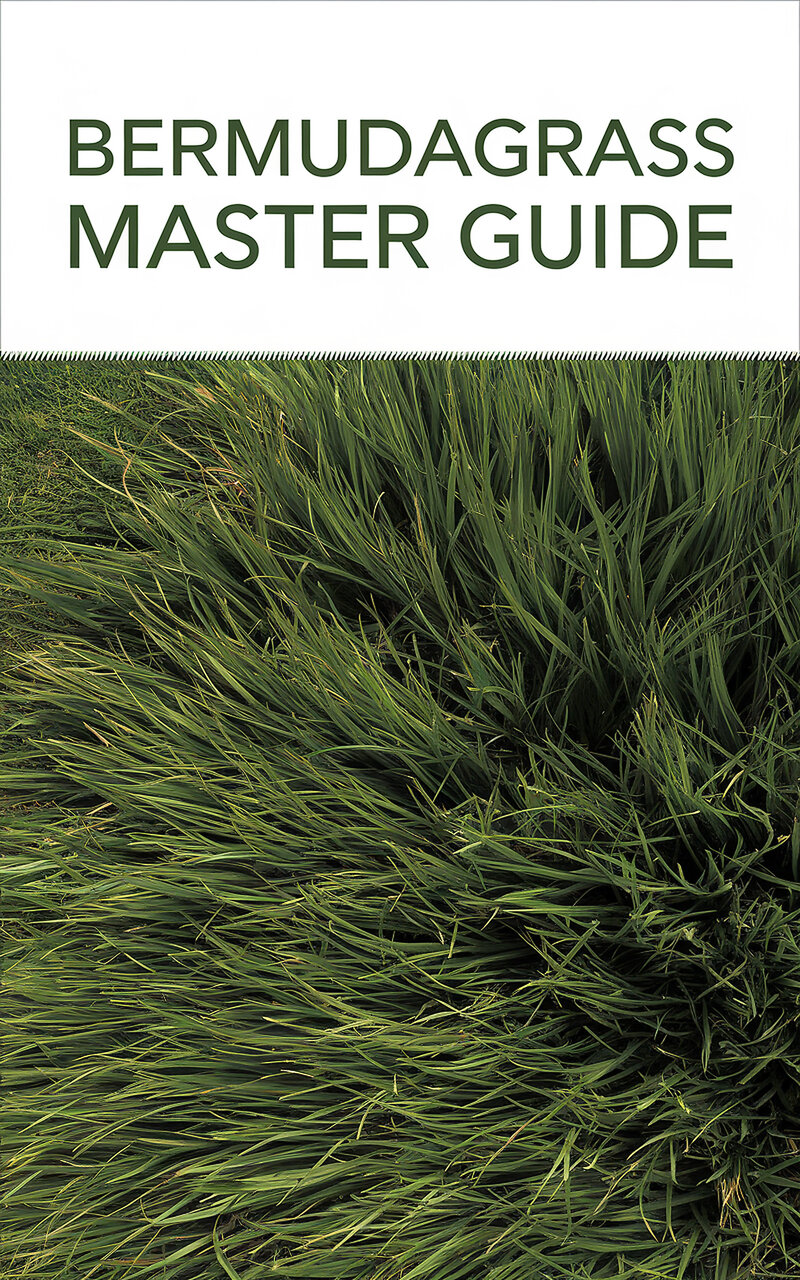
Cover of the Bermudagrass Master Guide, Volume 1 of the Lawn Care Guides Master Series, showing a mown bermudagrass fairway

This page describes the free PDF and gives you one section of it to use today. For identification, climate range, planting, and a care calendar, read our Bermuda grass lawn care guide. That page is the overview. The PDF is the long reference.

Free excerpt: which bermuda cultivar holds up to cold, drought, shade, and a rotary mower?

This matrix is adapted from Chapter 4 and Appendix C of the guide. We re-checked every cell against the extension source named in the caption. Where the source changed the guide's figure, the table uses the source. Where no source we checked publishes a figure, the cell says so.

Sources: cold injury from Kansas State's "A Hard Winter on Bermuda" (Fry and Xiang, July 16, 2018; Rocky Ford plots, Manhattan, KS, rated May 25, 2018). TifTuf breeding program from UGA CAES (2016). Release years for Oklahoma State cultivars from K-State's "Cold-Hardy Bermudagrass Varieties" (Fry, March 26, 2025). Water, shade, propagation and lawn mowing heights from UGA Extension Bulletin 1533-1, Lawns in Georgia (Waltz, December 8, 2020). "Not published" means none of the linked sources gives a figure for that cultivar.
Cultivar Bred / released How it is planted Winter injury, K-State 2018 Water use / drought Shade Lawn mowing height
Tifway (419) Georgia Coastal Plain Experiment Station, 1960 Sod, sprigs, plugs (hybrid; seed is sterile) 100% Withstands periodic drought (UGA) Hybrid class rated Fair to Poor (UGA) 1 to 1.5 in
TifTuf UGA Tifton Sod, sprigs, plugs Not in this trial About one-third less water than comparable bermudas (UGA bulletin); 38% less than Tifway (UGA, 2016) Acceptable quality down to 5.5 hr filtered sun after 6 years; best at 8+ hr 1 to 1.5 in
Celebration Not published in these sources Sod, sprigs, plugs only; no seed sold Not in this trial Not published in these sources Acceptable quality down to 5.5 hr filtered sun after 6 years; best at 8+ hr 1 to 2 in (UGA range for bermuda lawns)
Latitude 36 Oklahoma State, 2011 Not published in these sources 80% Not published in these sources Not published in these sources 1 to 1.5 in (UGA hybrid range)
NorthBridge Oklahoma State, 2011 Not published in these sources 75% Not published in these sources Not published in these sources 1 to 1.5 in (UGA hybrid range)
Yukon (seeded) Oklahoma State, 2000 Seed "Almost no winter injury" at a different Manhattan site, seeded 2017 Not published in these sources Common class rated Very Poor (UGA) 1 to 2 in
Common bermuda (seeded) Various Seed Not in this trial. UGA rates common cold hardiness Poor Drought resistance Excellent (UGA) Very Poor (UGA) 1 to 2 in

The K-State figures come from three replicated plots in one hard winter. The authors note that microclimate and exposure changed injury from site to site. Treat them as a stress test, not a guarantee for your yard.

Does a "cold-hardy" bermuda survive a hard transition-zone winter?

Source
Kansas State researchers rated winter injury on May 25, 2018: Tifway 100%, Latitude 36 80%, NorthBridge 75%, Patriot 70% (K-State Turf, 2018). The guide's Chapter 5 names Latitude 36 and NorthBridge as the best insurance against winterkill in the transition zone.
Operation
Applied to a 5,000 sq ft lawn, 75% to 80% injury is 3,750 to 4,000 sq ft of turf that must regrow or be replaced. NorthBridge, the less injured of the two, still left only a quarter of the lawn intact.
What to do differently
"Cold-hardy" ranks cultivars against each other. It does not make a lawn winter-proof. On the northern edge of bermuda's range, pick Latitude 36 or NorthBridge over Tifway, and budget for patching after a severe winter. K-State saw almost no injury on seeded Yukon, though at a different site.
Cost if you don't
Sod Tifway on the northern edge and one hard winter can take the whole stand. Re-sodding price per square foot varies by region and is not published in these sources. Get a local sod quote and multiply it by your lawn's square footage before you choose.

How much water does TifTuf actually save on a 5,000 sq ft lawn?

Source
UGA Extension says studies show TifTuf uses "approximately one-third less water" (Bulletin 1533-1). UGA's 2016 release puts it at 38 percent less than Tifway (UGA CAES). NC State recommends about 1 inch of water a week for growing bermuda (AG-431).
Operation
One inch over 1,000 sq ft is 623 gallons (Appendix B of the guide; NC State rounds it to 640). A 5,000 sq ft lawn takes 3,115 gallons for that inch. One-third less is 2,077 gallons. 38 percent less is 1,931 gallons. Half would be 1,558 gallons.
What to do differently
Plan TifTuf irrigation savings at one-third to 38 percent, which is 1,038 to 1,184 gallons a week on this lawn. Do not cut water in half. Adjust from there by watching for drought stress, because UGA publishes a use figure, not a TifTuf watering schedule.
Cost if you don't
Water at half and the lawn gets 373 to 519 gallons less each week than the research says it uses. That is roughly a fifth to a quarter of its need, every week of the season.

Your own number depends on rainfall and soil. Our lawn watering calculator runs the same gallons-per-inch arithmetic for your lawn size.

How low can you mow bermuda with a rotary mower?

Source
NC State: bermuda performs best at 3/4 to 1 inch with a reel mower, and heights below 1 inch "require a reel mower and very level ground" (AG-431). With a rotary, NC State recommends 1 to 2 inches and says to remove less than one-third of the leaf per mowing (Carolina Lawns).
Operation
Cross the height floor with the one-third rule, and you get the height at which you must mow again:
Heights from NC State Extension AG-431 and Carolina Lawns. "Mow again by" = cutting height x 1.5, the one-third rule.
MowerCutting heightMow again by
Reel, level ground3/4 in1 1/8 in
Reel, level ground1 in1 1/2 in
Rotary1 in (lowest NC State recommends)1 1/2 in
Rotary1 1/2 in2 1/4 in
Rotary2 in3 in
What to do differently
If you own a rotary, the 3/4-inch "best" height is not yours to use. Set the deck at 1 inch or higher. At 1 inch, mow before the grass reaches 1 1/2 inches, which NC State says means at least twice a week at low heights.
Cost if you don't
NC State says a rotary works only with sharp blades "set as low as possible without scalping." It defines scalping as excessive leaf removal by close mowing that "results in a brown, stubbly appearance."

Look up your own grass and mower in our mowing height guide. For equipment, see mowers for bermuda lawns.

How many hours of sun does a bermuda lawn need?

Source
In a UGA trial under heavy hardwood shade, TifTuf and Celebration kept acceptable quality down to 5.5 hours of filtered sun per day after 6 years. Both perform best with 8 or more hours (UGA Bulletin 1533-1). Mississippi State adds that those two are "by no means shade tolerant" (MSU P2892).
Operation
Compiled across both bulletins: 8 hours or more is where UGA says bermuda performs best. From 5.5 to 8 hours, only TifTuf and Celebration have published trial results. Below 5.5 hours, neither bulletin names a bermuda that held acceptable quality.
What to do differently
Count the midsummer hours of sun on the shadiest part of the lawn before you choose. Below 5.5 hours, compare zoysia grass or St. Augustine grass instead.
Cost if you don't
MSU lists what shade does to bermuda: elongated stems, weakened rhizomes, lower density, and less root mass. Thin turf under trees is the predictable result.

What is in the 248-page PDF

  • 248 pages, US Letter, about 2.7 MB. Updated September 13, 2026.
  • 10 parts: a 90-day quick-start chapter, 30 numbered chapters, and 5 appendices.
  • Written for homeowners and professionals, with golf, sports-field, and professional chapters in Parts IV and VI.
  • A synthesis of university extension research and the author's management notes. Pesticide labels and your state extension office override it, and the guide's own disclaimer says so.
  • Organized around active ingredients rather than brand names in the product selection chapter.

Chapter titles below are copied from the body of the current PDF.

Start here

  • Ch 0.5: Quick Start Guide, Your First 90 Days with Bermudagrass

Part I: Botanical Foundation

  • Ch 1: Botanical Classification & Evolution
  • Ch 2: Plant Anatomy & Morphology

Part II: Cultivars & Variety Selection

  • Ch 3: Common Bermudagrass vs Hybrid Varieties
  • Ch 4: Major Cultivar Profiles
  • Ch 5: Cultivar Selection Decision Matrix

Part III: Establishment & Installation

  • Ch 6: Site Preparation & Soil Science
  • Ch 7: Installation Methods
  • Ch 8: Establishment Phase Management

Part IV: Advanced Maintenance & Agronomy

  • Ch 9: Mowing Science & Practices
  • Ch 10: Fertility & Soil Nutrition
  • Ch 11: Irrigation Management
  • Ch 12: Cultural Practices: Aeration, Dethatching, Topdressing
  • Ch 13: Plant Growth Regulators (PGRs)

Part V: Integrated Pest Management

  • Ch 14: Disease Management
  • Ch 15: Insect Pest Management
  • Ch 16: Weed Management
  • Ch 17: Diagnostic Skills & Problem Solving

Part VI: Specialized Management

  • Ch 18: Sports Turf & Athletic Field Management
  • Ch 19: Overseeding Bermudagrass with Ryegrass
  • Ch 20: Professional vs. Home Lawn Management

Part VII: Regional & Environmental Adaptation

  • Ch 21: Regional Management Strategies
  • Ch 22: Environmental Stress Management

Part VIII: Troubleshooting & Recovery

  • Ch 23: Common Problems & Solutions
  • Ch 24: Renovation & Restoration

Part IX: Science & Research

  • Ch 25: Bermudagrass Breeding & Genetics
  • Ch 26: Current Research & Future Directions

Part X: Practical Resources

  • Ch 27: Seasonal Maintenance Calendars
  • Ch 28: Product Selection Guide
  • Ch 29: Record Keeping & Documentation
  • Ch 30: Resources & References

Appendices

  • A: Glossary of Terms
  • B: Conversion Tables
  • C: Quick Reference Chart, Cultivar Comparison
  • D: Diagnostic Flowchart
  • E: Bibliography & Research Citations

Get the free Bermudagrass Master Guide PDF

Enter your email and we send a download link to the 248-page PDF. It is free, with nothing to buy.

We email the PDF link and occasional bermudagrass tips. To unsubscribe, reply to any email and we remove you.

Prefer a bound copy? A printed edition is sold on Amazon as a Kindle eBook and a paperback. Its page count and edition date may differ from this PDF. As an Amazon Associate we earn from qualifying purchases.

Want it as a book?

The Bermudagrass Master Guide and Anton's other lawn guides are sold on Amazon as Kindle eBooks, paperbacks and hardcovers. The Amazon editions can differ from this PDF in page count and edition date.

See Anton's books on Amazon

Who wrote it

Anton Schwarz, Lead Turfgrass Specialist at Lawn Care Guides

Anton Schwarz is Lead Turfgrass Specialist at Lawn Care Guides, with a B.S. in Turfgrass Science from the University of Georgia. His background in warm-season turf, athletic fields, and residential lawns is on our about page.

The excerpt on this page was checked by the Lawn Care Guides editors against the extension sources listed below. Nothing on this page reports our own test plots.

Before you plant or change your bermuda program

  1. Count midsummer sun hours on the shadiest part of the lawn. Under 5.5, look past bermuda.
  2. Check how hard your winters get. On the northern edge, choose Latitude 36, NorthBridge, or seeded Yukon over Tifway.
  3. Price re-sodding your whole lawn locally, so a bad winter has a number attached.
  4. Match mowing height to the mower you own: 1 inch minimum with a rotary.
  5. If you install TifTuf, cut irrigation by one-third to 38 percent, then adjust by observation.
  6. Download the PDF for the fertility, pest, and calendar chapters. It was corrected against these sources in September 2026.

Questions about the guide

Is the Bermudagrass Master Guide really free?

Yes. The PDF costs nothing. You enter an email address, and we send a link to the 248-page file. There is nothing to cancel.

What format is it, and how big is the file?

It is a 248-page PDF at US Letter size, about 2.7 MB. It opens in any browser or PDF reader and prints on a home printer. This edition was generated on June 9, 2026.

How is this different from the Bermuda grass guide on this site?

The Bermuda grass guide on this site is the free web overview: identification, climate, establishment, and a care calendar. The Master Guide is the long reference, with 30 chapters plus a quick-start chapter, cultivar profiles, pest chapters, and appendices.

Does the PDF have any known errors?

Yes, four that we know of, and they are listed on this page with the extension source for each. The most important: TifTuf uses about one-third to 38 percent less water than Tifway in UGA studies, not half. Read those lines with the source beside them.

Is there a printed edition?

A bound edition is sold on Amazon in Kindle and paperback formats. Its page count and edition date may differ from this PDF, so check the Amazon listing before you buy.

Related bermuda pages

Sources

  1. Waltz, C. Lawns in Georgia: Selection and Species, UGA Extension Bulletin 1533-1, December 8, 2020.
  2. Watson, F. M. TifTuf Bermuda grass ideal for home lawns, UGA CAES, April 13, 2016.
  3. Fry, J. and Xiang, M. A Hard Winter on Bermuda, K-State Turf and Landscape, July 16, 2018.
  4. Fry, J. Cold-Hardy Bermudagrass Varieties, K-State Turf and Landscape, March 26, 2025.
  5. Miller, G. et al. Bermudagrass Lawn Maintenance Calendar, NC State Extension AG-431, July 30, 2021.
  6. Carolina Lawns: A Guide to Maintaining Quality Turf in the Landscape, NC State Extension, July 2, 2021.
  7. Selecting and Managing Turfgrass for Shade, Mississippi State University Extension, P2892.

Gallons per inch: 1,000 sq ft x 1/12 ft x 7.48 gal per cubic foot = 623 gallons.