Best Lawn Fertilizers
The right fertilizer transforms a struggling lawn into a lush, green carpet. We tested 15 fertilizers across cool and warm-season grasses to find the best options for every lawn type and budget.
Video Review
Quick Picks
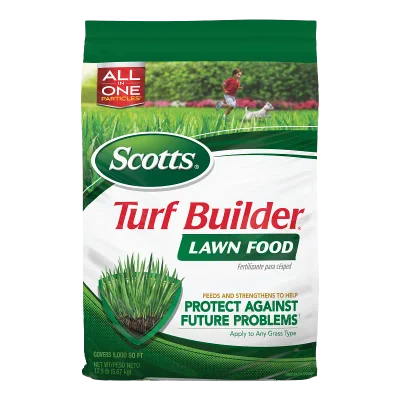
Scotts Turf Builder
Fast-acting synthetic with extended feeding. Visible results in days, feeds for up to 2 months.
$25/12,000 sq ft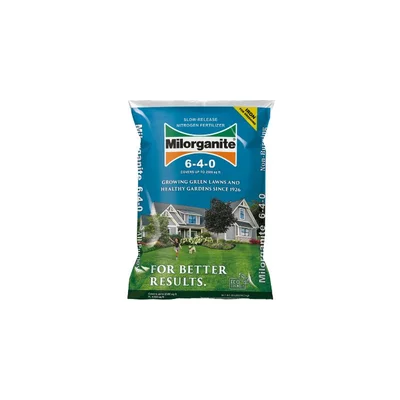
Milorganite
Slow-release organic nitrogen from Milwaukee. Won't burn grass, feeds for 8-10 weeks, and improves soil health. The safest choice for any lawn.
$18/32 lb bag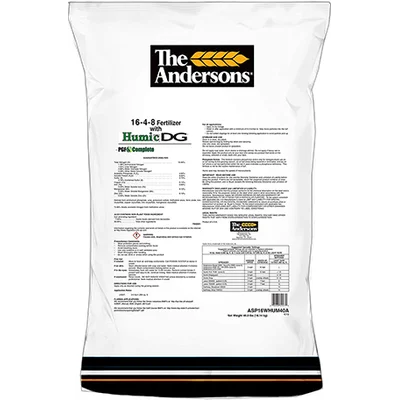
The Andersons PGF Complete
Professional-grade with humic acid. Used by golf courses and sports turf managers.
$65/40 lb bagUnderstanding Lawn Fertilizers
Fertilizer provides the essential nutrients your lawn can't get enough of from soil alone. Nitrogen drives leaf growth and that deep green color everyone wants. Phosphorus builds strong roots. Potassium helps your lawn resist disease, drought, and temperature stress.
The right fertilizer applied at the right time can transform a thin, pale lawn into thick, healthy turf in a single season. The wrong choice - or poor timing - can burn your grass, waste money, or pollute local waterways.
Fertilizer Types Explained
Granular vs Liquid
Granular fertilizers are the most common choice for lawns. They're easy to apply with a broadcast spreader, provide extended feeding, and are less likely to cause application errors. Most homeowners should use granular fertilizers.
Liquid fertilizers are absorbed faster and can be applied with a hose-end sprayer. They're good for quick green-up or foliar feeding but require more frequent application. Best for experienced lawn care enthusiasts or specific nutrient corrections.
Synthetic vs Organic
Synthetic fertilizers provide precise nutrient ratios and fast results. Plants can absorb nutrients immediately. The downside: they don't improve soil health and can burn grass if over-applied.
Organic fertilizers (like Milorganite) release nutrients slowly as soil microbes break them down. They improve soil structure, support beneficial organisms, and won't burn grass. Results take longer but benefits compound over time.
Slow-Release vs Quick-Release
Slow-release (also called controlled-release) fertilizers feed gradually over weeks or months. They're more forgiving of application errors and provide steady nutrition. Most lawn fertilizers today contain at least some slow-release nitrogen.
Quick-release fertilizers provide immediate nutrients. Use them for rapid green-up or correcting deficiencies, but they require more careful application to avoid burning.
Detailed Reviews
1. Milorganite Organic Nitrogen Fertilizer
$18/32 lb Best OverallPros
- Won't burn grass - ever
- Improves soil health over time
- Contains iron for deep green color
- Safe for pets and kids after watering
- No salt buildup in soil
- Consistent quality since 1926
Cons
- Slower results than synthetic
- Distinct smell for first few days
- Lower nitrogen content requires more product
Our Testing Experience
Milorganite has been our go-to recommendation for years, and our latest testing confirmed why. Applied to stressed, thin lawns in spring, we saw gradual but substantial improvement over 8 weeks. The grass developed a deep green color from the iron content without the surge-and-fade pattern of synthetic fertilizers.
The real benefit shows over multiple seasons. Test plots treated exclusively with Milorganite for two years developed noticeably better soil structure - the turf pulled up roots with more soil attached, indicating improved organic matter and microbial activity.
Yes, it smells for a day or two after application. Yes, the 6-4-0 analysis means you're applying more product per feeding. But the safety margin and soil-building benefits make it our top pick for most homeowners.
Best for: Homeowners who want foolproof fertilization with long-term soil health benefits.
Check Price on Amazon2. Scotts Turf Builder Lawn Food
$25/12,000 sq ft Best SyntheticPros
- Fast visible results
- Excellent coverage per bag
- Widely available everywhere
- Consistent particle size spreads evenly
- All-in-one feeding solution
Cons
- Can burn grass if over-applied
- Doesn't improve soil biology
- May cause surge growth requiring more mowing
Our Testing Experience
When you need your lawn green fast, Scotts Turf Builder delivers. We saw visible improvement within 5-7 days on test plots - noticeably darker color and increased growth rate. The high nitrogen content (32%) means you're applying less product per application.
The extended-release technology works well. Unlike older synthetic fertilizers that would cause a burst of growth followed by a crash, Turf Builder maintained steady feeding for about 6 weeks in our tests.
Be careful with application rates. Overlapping passes or applying before rain can cause fertilizer burn. Calibrate your spreader properly and don't exceed the recommended rate.
Best for: Homeowners who want fast results and value convenience.
Check Price on Amazon3. The Andersons PGF Complete 16-4-8
$65/40 lb Best ProfessionalPros
- Professional-grade quality
- Contains humic acid for soil health
- Balanced NPK with micronutrients
- Very small particle size for even coverage
- Used by golf courses and sports fields
Cons
- Higher price point
- May be overkill for casual lawn care
- Harder to find locally
Our Testing Experience
PGF Complete is what lawn care professionals use when they want the best. The tiny particle size (SGN 75) provides incredibly even distribution - you won't see striping or uneven coloring from inconsistent spreading.
The humic acid addition sets this apart from typical synthetic fertilizers. While not fully organic, it provides some soil health benefits that pure synthetics don't. Our test plots showed improved water retention and slightly better stress recovery compared to straight synthetic fertilizers.
The balanced 16-4-8 ratio with micronutrients covers all bases. It's a complete feeding solution that addresses common deficiencies without needing separate products.
Best for: Lawn enthusiasts who want professional results and don't mind paying for quality.
Check Price on Amazon4. Jonathan Green Green-Up Lawn Fertilizer
$35/15,000 sq ftPros
- Contains iron for deep green color
- Long feeding duration
- Good value for coverage area
- Won't stain concrete
Cons
- Limited regional availability
- No phosphorus (may need supplement)
Our Testing Experience
Jonathan Green has a loyal following in the Northeast, and for good reason. The Green-Up formula includes iron that produces a deep, dark green color that really stands out. The 0% phosphorus complies with phosphorus restrictions in many states.
The slow-release nitrogen provided steady feeding for about 8 weeks in our tests. We appreciated that the iron is in a form that won't stain driveways or sidewalks - a common problem with some iron-containing fertilizers.
Best for: Northeastern homeowners who want that dark green look.
Check Price on Amazon5. Pennington UltraGreen Lawn Fertilizer
$22/14,000 sq ft Best BudgetPros
- Excellent price per square foot
- Contains 5% iron
- Long-lasting formula
- Widely available
Cons
- Larger particle size than premium brands
- May require more precise calibration
Our Testing Experience
Pennington UltraGreen offers solid performance at a budget-friendly price. The 5% iron content provides good greening effect, and the coverage per bag is excellent. It's a sensible choice for larger properties where cost adds up quickly.
Performance was comparable to more expensive synthetic options in our tests. The main trade-off is slightly larger particle size, which can lead to less even distribution in spots. Take your time with application and overlap slightly for best results.
Best for: Budget-conscious homeowners with larger lawns.
Check Price on Amazon6. Simple Lawn Solutions Lawn Food
$25/gallon Best LiquidPros
- Fast absorption and results
- Easy hose-end application
- No spreader needed
- Good for quick corrections
- Contains seaweed and fish extracts
Cons
- More frequent application needed
- Higher cost per feeding
- Less forgiving of over-application
Our Testing Experience
Simple Lawn Solutions fills a niche for homeowners who want liquid feeding. The hose-end sprayer attachment makes application genuinely easy - no spreader calibration, no leftover product in the hopper.
Results were visible within 3-4 days in our tests. The seaweed and fish-based nutrients provide some organic benefits along with the synthetic NPK. It's more expensive per feeding than granular, but the convenience factor is real.
We'd recommend this as a supplement to granular fertilizer rather than a primary feeding program. Use it for quick green-up before events or to address stressed areas.
Best for: Homeowners who prefer liquid application or want to supplement granular feeding.
Check Price on AmazonFertilizer Schedule by Grass Type
Cool-Season Grasses
Kentucky Bluegrass, Tall Fescue, Perennial Ryegrass, Fine Fescue
- Early Fall (September): Primary feeding - most important application of the year
- Late Fall (November): Winterizer application for root development
- Late Spring (May): Light feeding as needed
- Avoid: Summer fertilization during heat stress
Warm-Season Grasses
Bermuda, Zoysia, St. Augustine, Centipede, Bahia
- Late Spring (April-May): First feeding after green-up
- Summer (June-August): Regular feeding during active growth
- Early Fall (September): Final feeding before dormancy
- Avoid: Fertilizing dormant or transitioning grass

Reviewed by Rob Boirun
Founder & Lead Turfgrass Specialist at Lawn Care Guides. Certified Turfgrass Professional with 12+ years of hands-on experience testing lawn care products across multiple climate zones.
Frequently Asked Questions
What is the best fertilizer for lawns?
For most lawns, Milorganite is our top overall pick due to its slow-release organic formula that won't burn grass and improves soil health over time. For quick results, Scotts Turf Builder provides fast greening. The best choice depends on your priorities: organic vs synthetic, speed of results, and budget.
When should I fertilize my lawn?
Cool-season grasses (fescue, bluegrass, ryegrass) benefit most from fall fertilization (September-November) with a lighter spring feeding. Warm-season grasses (bermuda, zoysia, St. Augustine) should be fertilized in late spring through summer when actively growing. Avoid fertilizing during dormancy or extreme heat.
What do the NPK numbers on fertilizer mean?
NPK stands for Nitrogen (N), Phosphorus (P), and Potassium (K) - the three primary plant nutrients. Nitrogen promotes leaf growth and green color. Phosphorus supports root development. Potassium improves overall plant health and stress resistance. A fertilizer labeled 24-0-10 contains 24% nitrogen, 0% phosphorus, and 10% potassium.
Is organic or synthetic fertilizer better for lawns?
Both have advantages. Organic fertilizers release slowly, improve soil biology, and won't burn grass. Synthetic fertilizers provide faster results and precise nutrient ratios. Many experts recommend a combination approach: organic for regular feeding and synthetic for targeted corrections or quick results.
How much fertilizer should I apply?
Follow the product label rates exactly. For most lawns, apply about 1 pound of nitrogen per 1,000 square feet per application. This equals roughly 3-4 pounds of a 32-0-4 fertilizer or 16-17 pounds of Milorganite per 1,000 sq ft. Over-fertilizing wastes money, can burn grass, and pollutes waterways.