🏡 OFFER: Get the yard of your dreams — hands-free. New TruGreen plans include a $100 Gift Card Claim $100 Gift Card →
ESC
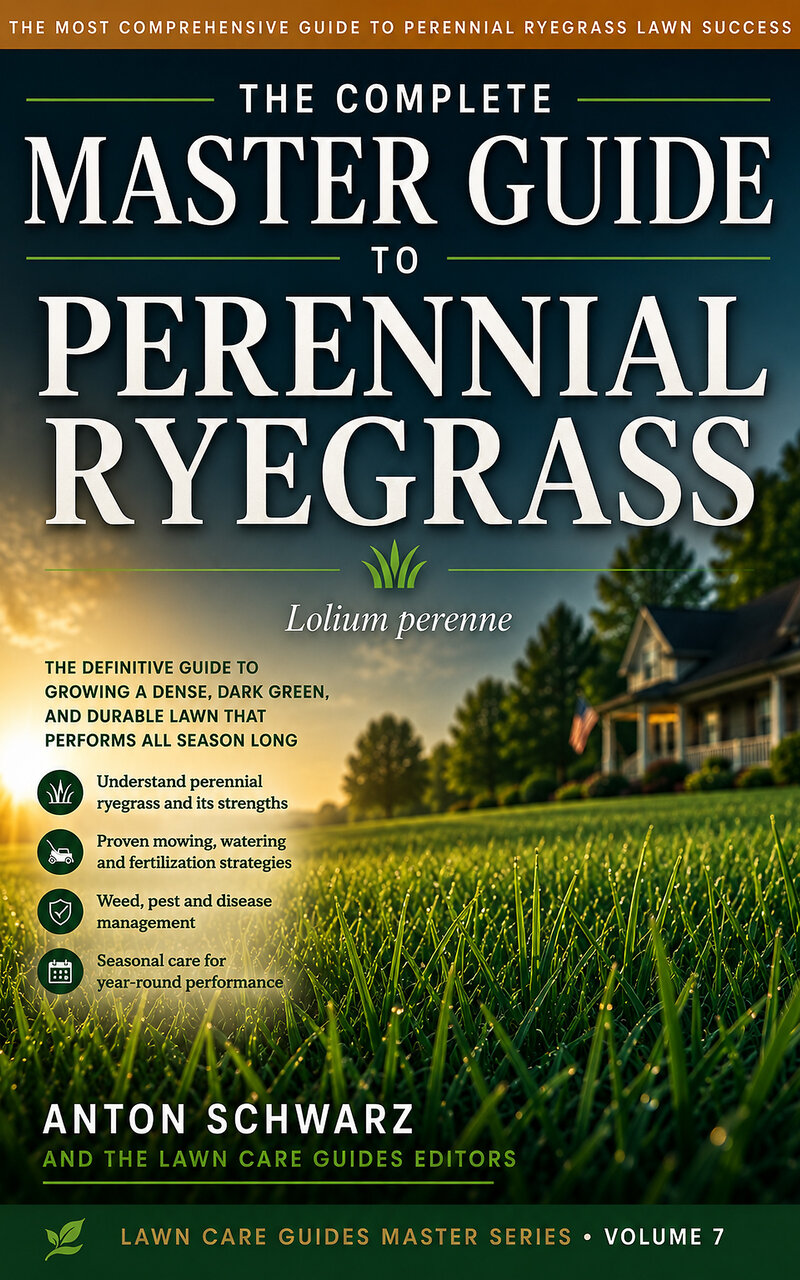
The Complete Master Guide to Perennial Ryegrass — cover

Volume 7 · Lawn Care Guides Master Series

The Complete Master Guide to Perennial Ryegrass

Lolium perenne

The cool-season grass with the fastest germination of any common turfgrass and the best wear tolerance in the cool-season category. The dominant species of European football pitches, U.S. sports turf in cool-season regions, and the standard winter overseed of dormant southern bermuda.

146 pages 21 chapters · 7 parts Kindle / Paperback / Hardcover
Get it on Amazon

Why this volume is different

4-7 day germination is the species' defining feature. Why every use case for perennial ryegrass — nurse grass in blends, sports turf, quick-cover, winter overseeding — traces back to this single fact.

The best wear tolerance of any cool-season grass. Why every Premier League pitch, every MLS field in cool-season regions, and every college football field in the Northeast and Pacific Northwest is essentially pure perennial ryegrass.

Gray leaf spot is the disease that defines transition-zone PR management. Why GLR cultivars (Brightstar SLT, Stellar GLR, Pinnacle II GLR) are non-negotiable in this region — and how to time the cultural defense program.

Annual overseeding is essential. Why PR has no rhizomes for self-repair — and how the bunch-type biology drives the maintenance calendar.

Southern winter overseeding, explained end-to-end. A full chapter on the October-through-May process for overlaying ryegrass on dormant bermuda for winter color.

21 chapters, 7 parts, one species. Not a generic 'ryegrass' anthology that conflates annual ryegrass, perennial ryegrass, common type, and improved turf type.

Who this book is for

Homeowners in cool-season regions (Pacific Northwest, Northern New England, Upper Midwest) who want a credible single source.
Sports turf managers maintaining ryegrass athletic fields at high school, college, or professional level.
Southern homeowners doing annual winter overseeding of bermuda lawns for winter color.
Anyone tired of generic 'ryegrass' advice that doesn't distinguish modern turf-type from forage type.

What's inside

Twenty-one chapters in seven parts plus a consolidated cheat-sheet appendix, NTEP data summary, glossary, and further-reading list.

Part I: Botanical Foundation

  • The Fastest-Germinating Cool-Season Grass
  • Plant Anatomy, Glossy Leaves, and Field Identification

Part II: Cultivar Encyclopedia

  • Improved Turf-Type vs Common Type — The Cultivar Gap
  • Major Cultivar Profiles (Manhattan 6, Top Hat 2, Pizzazz 2, Brightstar SLT)
  • Blend and Mix Selection

Part III: Establishment

  • Site Preparation and Soil Foundation
  • Seeding — The Highest Rate and Fastest Germination
  • Sod vs Seed and the Hydroseed Option
  • Overseeding — Annual Northern Practice and Southern Winter Overseeding

Part IV: Maintenance

  • Mowing — 1.5 to 3 Inches and the Sports Field Standard
  • Watering — The High-Demand Cool-Season Grass
  • Fertilization — 3-4 Pounds Nitrogen and the Spring-Fall Program
  • Aeration, Thatch, and Cultivation Practices

Part V: Pest, Disease, and Weed Management

  • Gray Leaf Spot, Red Thread, Pythium — The Ryegrass Disease Picture
  • Insect Pests and the Endophyte Defense
  • Weed Control in Bunch-Type Turf

Part VI: Regional & Specialty Uses

  • Where Perennial Ryegrass Wins (Cool Climate, Sports Fields, Quick Cover)
  • The Sports Turf Chapter — European Football, MLS, College Athletics
  • Winter Overseeding of Bermuda — The Southern Use Case
  • Microclimates — Shade, Slopes, Salt, Soil pH

Part VII: Calendar & Reference

  • Annual Maintenance Calendar by Use Pattern
  • Appendix A: Consolidated Cheat Sheets
  • Appendix B: NTEP Data Summary
  • Appendix C: Glossary · Appendix D: Further Reading

Three formats. One book.

Available on Amazon as a Kindle eBook, perfect-bound paperback, and case-laminate hardcover — all the same content.

Kindle

$9.99

Reflowable eBook. Reads on any Kindle, phone, or tablet via the Kindle app.

Paperback

$19.99

6×9, B&W interior, matte cover. 146 pages. Print-on-demand.

Hardcover

$29.99

6×9, B&W interior, case-laminate cover. 146 pages. The reference-shelf edition.

About the author

Anton Schwarz is the lead turfgrass specialist at Lawn Care Guides. The Lawn Care Guides Master Series is built on synthesis of university cooperative extension publications, NTEP cultivar performance data, and direct field experience across residential, athletic-field, and golf-course turf systems.

Each volume in the series covers one grass species in depth — botanical foundation, cultivar encyclopedia, establishment, maintenance program, pest/disease/weed management, regional adaptation, and a month-by-month action calendar. Written to be the single-source field reference you actually keep on the shelf.

Frequently asked questions

I'm in the South with a bermuda lawn. Do I need this book?

If you do (or are considering) annual winter overseeding for winter color, yes — Chapter 19 covers the full October-through-May process. If you let bermuda go dormant in winter naturally, the Bermudagrass volume is what you need instead.

What's the difference between annual and perennial ryegrass?

Different species. Annual ryegrass dies after one season; perennial ryegrass lives for years. Hardware-store 'fast-germinating ryegrass' bags are often annual. This book is about Lolium perenne — perennial — exclusively. Chapter 1 covers the distinction in detail.

I want to install an athletic field. Is this enough?

It covers the species side comprehensively (Chapter 18 is the sports turf chapter). Full athletic field design — drainage, base construction, root-zone engineering, hybrid turf systems — is a larger discipline beyond a single grass-species book.

I'm in the transition zone with gray leaf spot pressure. Should I use PR at all?

Yes, but with GLR cultivars (Brightstar SLT, Stellar GLR, Pinnacle II GLR) and a preventive program. Chapter 14 walks through the gray leaf spot defense in detail. Tall fescue is often a better default for transition-zone residential — but PR has unique advantages for athletic/high-traffic use.

What format should I buy?

Kindle for searchable digital reference, paperback for daily field use (most common), hardcover for the shelf-edition keepsake. Same content across all three.

Volume 7 of the Lawn Care Guides Master Series

Seven single-volume references — one per major lawn grass species.

Browse the full series →