🏡 OFFER: Get the yard of your dreams — hands-free. New TruGreen plans include a $100 Gift Card Claim $100 Gift Card →
ESC
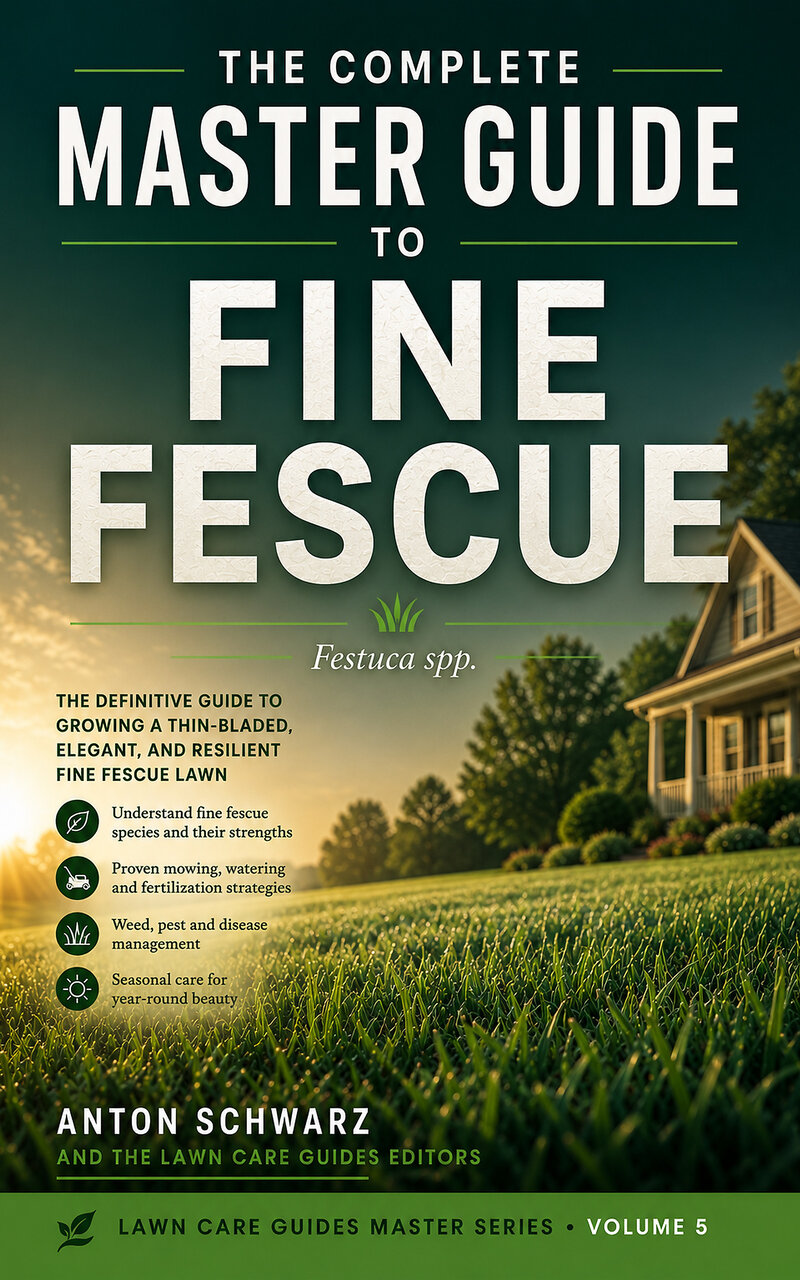
The Complete Master Guide to Fine Fescue — cover

Volume 6 · Lawn Care Guides Master Series

The Complete Master Guide to Fine Fescue

Festuca spp.

The four-species cool-season category that dominates shade-tolerant and low-input residential lawns. Creeping red, chewings, hard, sheep — each with different strengths. Botany, cultivar encyclopedia, establishment, low-input maintenance program, the no-mow lawn movement chapter, and the month-by-month action plan.

136 pages 21 chapters · 7 parts Kindle / Paperback / Hardcover
Get it on Amazon

Why this volume is different

Fine fescue is a category, not a grass. Why creeping red, chewings, hard, and sheep fescue have different strengths — and why a 'fine fescue blend' bag with no species ratio disclosure is probably 80% creeping red.

The shade-tolerant champion of cool-season grasses. Why chewings fescue specifically outperforms every other turfgrass in 2-4 hours of direct sun.

The lowest-input lawn you can grow. Why fine fescue thrives at 1 lb of nitrogen per year — half what Kentucky bluegrass needs and a fraction of what perennial ryegrass demands.

The no-mow lawn movement, explained agronomically. A full chapter on how to convert to a 1-2-mowings-per-year meadow without ending up with weed-dominated chaos.

Endophyte-enhanced cultivars for insect resistance. Why modern Compass, Reliant IV, and Audubon outperform older lines on the insect-pressure front.

21 chapters, 7 parts, four species. Not a generic shade-grass anthology. Every page is specific to Festuca.

Who this book is for

Homeowners with shady yards who want a credible single source for the one grass that actually performs in 2-4 hour-sun conditions.
Lawn pros transitioning clients from high-input KBG programs to lower-input alternatives.
No-mow lawn movement readers who want the agronomic backbone for naturalized meadow lawns.
Anyone tired of generic 'fine fescue blend' bags with no species ratio disclosure.

What's inside

Twenty-one chapters in seven parts plus a consolidated cheat-sheet appendix, NTEP data summary, glossary, and further-reading list.

Part I: Botanical Foundation

  • The Four Fine Fescue Species — Why 'Fine Fescue' Is a Category, Not a Grass
  • Plant Anatomy, Narrow Leaves, and Field Identification

Part II: Cultivar Encyclopedia

  • Choosing Among the Four Species (Creeping Red, Chewings, Hard, Sheep)
  • Major Cultivar Profiles by Species (Boreal, Compass, Reliant IV, Audubon)
  • Blend Selection Decision Matrix

Part III: Establishment

  • Site Preparation and Soil Foundation
  • Seeding — The Mid-Range Rate and Slow Germination
  • Sod vs Seed (Mostly Seed) and Plug Alternatives
  • Overseeding the Self-Repairing Stand

Part IV: Maintenance

  • Mowing — Traditional 3-4 Inches or the No-Mow Option
  • Watering — The Lowest-Water Cool-Season Grass
  • Fertilization — Less Than Anything Else You'll Ever Manage
  • Aeration, Thatch, and the Low-Input Reality

Part V: Pest, Disease, and Weed Management

  • Red Thread, Dollar Spot, and the Fine Fescue Disease Picture
  • Insect Pests and the Endophyte Defense
  • Weed Control in Low-Aggressive Turf

Part VI: Regional & Specialty Uses

  • Where Fine Fescue Wins (Shade, Cool Climates, Low Input)
  • The No-Mow Lawn Movement and Meadow-Style Management
  • Microclimates — Shade, Slopes, Salt, Soil pH

Part VII: Calendar & Reference

  • Annual Maintenance Calendar by Use Pattern
  • Appendix A: Consolidated Cheat Sheets
  • Appendix B: NTEP Data Summary
  • Appendix C: Glossary · Appendix D: Further Reading

Three formats. One book.

Available on Amazon as a Kindle eBook, perfect-bound paperback, and case-laminate hardcover — all the same content.

Kindle

$9.99

Reflowable eBook. Reads on any Kindle, phone, or tablet via the Kindle app.

Paperback

$19.99

6×9, B&W interior, matte cover. 136 pages. Print-on-demand.

Hardcover

$29.99

6×9, B&W interior, case-laminate cover. 136 pages. The reference-shelf edition.

About the author

Anton Schwarz is the lead turfgrass specialist at Lawn Care Guides. The Lawn Care Guides Master Series is built on synthesis of university cooperative extension publications, NTEP cultivar performance data, and direct field experience across residential, athletic-field, and golf-course turf systems.

Each volume in the series covers one grass species in depth — botanical foundation, cultivar encyclopedia, establishment, maintenance program, pest/disease/weed management, regional adaptation, and a month-by-month action calendar. Written to be the single-source field reference you actually keep on the shelf.

Frequently asked questions

I have a heavily shaded yard. Will fine fescue work where Kentucky bluegrass failed?

Yes, in most cases. Chewings fescue specifically tolerates 2-4 hours of direct sun better than any common turfgrass. Chapter 1 and Chapter 17 cover the shade specifics. Lawns with under 2 hours direct sun should consider ground cover instead.

Is the no-mow lawn movement real or a fad?

Real and increasingly mainstream. Chapter 18 is dedicated to the agronomic specifics — species mix, year-1 vs year-3 management, the tick/snake honest discussion, and the HOA reality check.

What's the difference between this and the Tall Fescue volume?

Different species, different use cases. Tall fescue is for full-sun lawns in the transition zone wanting durability. Fine fescue is for shade, low input, and meadow-style lawns in cooler climates. Both books cover the boundary cases.

Are specific brands recommended?

Cultivar names (Boreal, Compass, Reliant IV, Audubon) yes — those are the genetic identifiers that actually matter. Brand names for fertilizers, herbicides, and tools are generally avoided in favor of active ingredients.

What format should I buy?

Kindle for searchable digital reference, paperback for daily field use (most common), hardcover for the shelf-edition keepsake. Same content across all three.

Volume 6 of the Lawn Care Guides Master Series

Seven single-volume references — one per major lawn grass species.

Browse the full series →